What a strong board looks like
Two boards that would score well. Read each one left to right: customer, problem, metric, key result, objective. Every sticky points at the same thing.
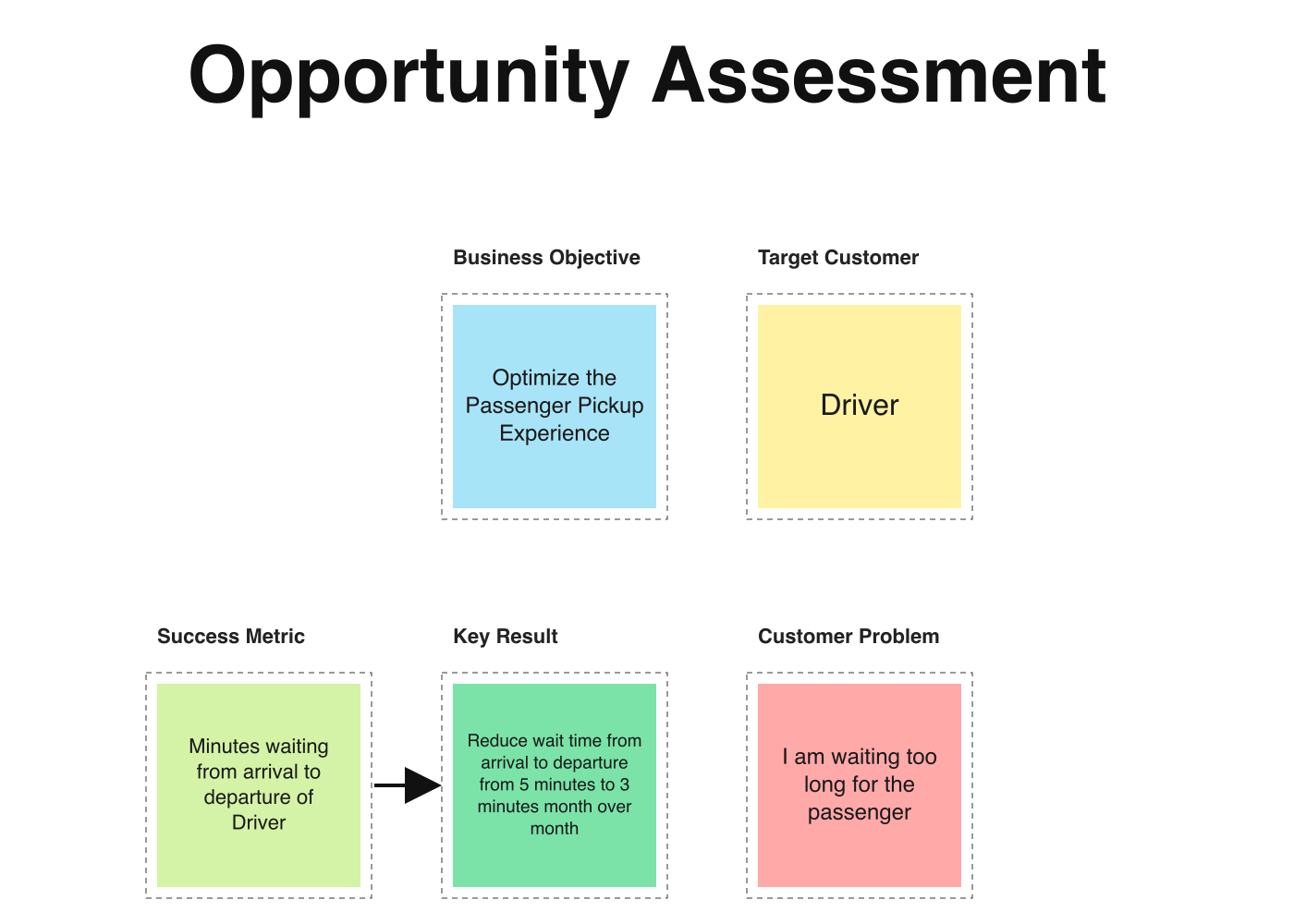
The workshop example: Uber driver wait time
Business Objective
Optimize the Passenger Pickup Experience
Target Customer
Driver
Success Metric
Minutes waiting from arrival to departure of Driver
Key Result
Reduce wait time from arrival to departure from 5 minutes to 3 minutes month over month
Customer Problem
I am waiting too long for the passenger
Why it works
- •The customer is one specific person, the driver, and the problem is in that person's words.
- •The metric counts the pain itself: minutes waiting. Not revenue, not complaints, not a feature.
- •The key result puts a real before and after on that exact metric, with a time frame you can check monthly.
- •The objective answers so what without a number, and it leaves at least nine solutions open. The push notification was only one of them.
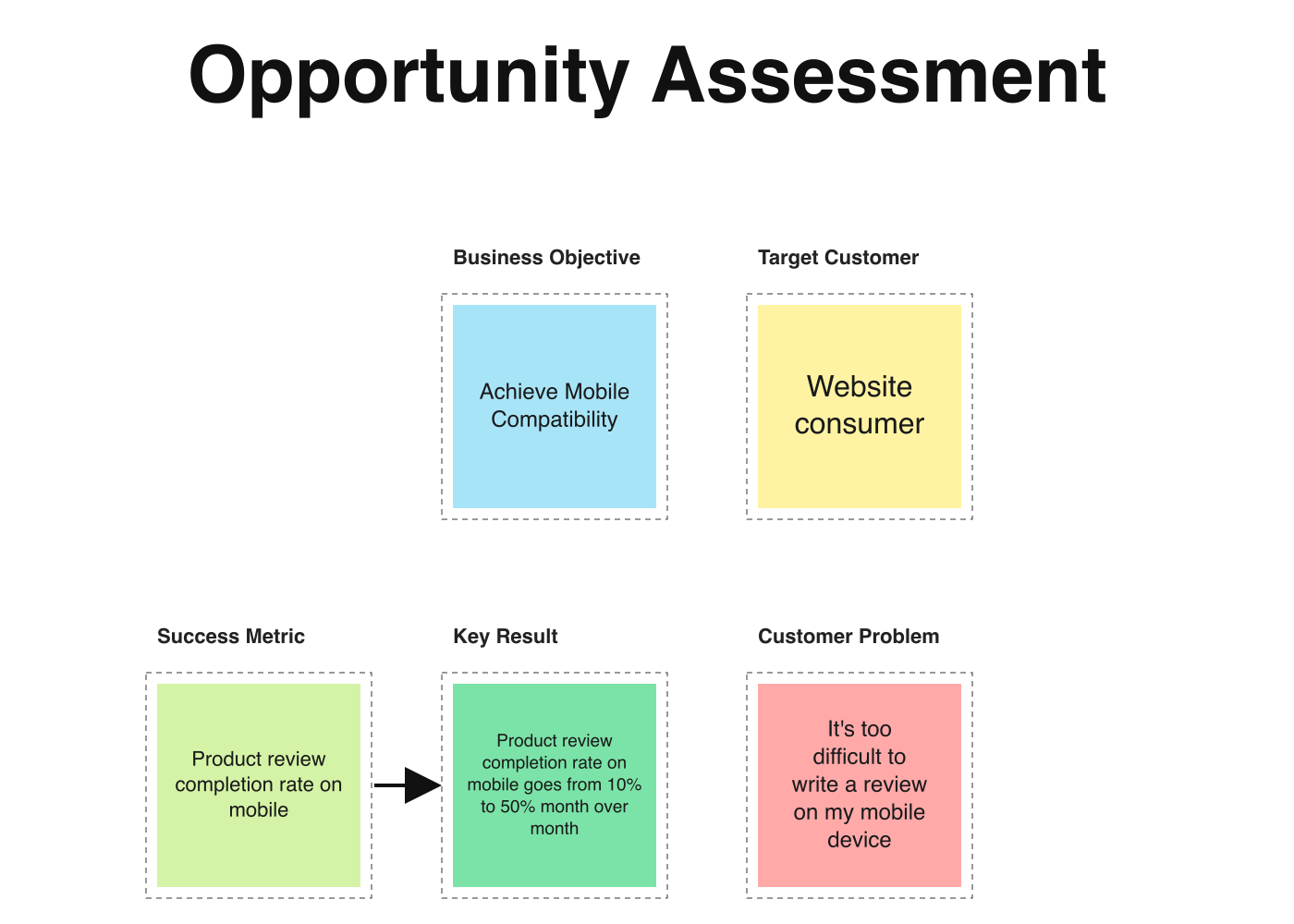
Writing a product review on a phone
Business Objective
Achieve Mobile Compatibility
Target Customer
Website consumer
Success Metric
Product review completion rate on mobile
Key Result
Product review completion rate on mobile goes from 10% to 50% month over month
Customer Problem
It's too difficult to write a review on my mobile device
Why it works
- •The problem names the moment and the device. You can picture the person thumbing through a form and giving up.
- •The metric is a rate, so a percentage in the key result is legitimate here. It has a baseline and a target.
- •The key result uses the metric's exact words, so nobody has to guess what is being measured.
- •The objective is short and stays out of the solution. Redesign the form, shorten it, add voice input: all still on the table.